Can you build a home in your parents' garden in Ireland? The honest answer is: maybe, but do not buy the unit before you test the site, use case and rules.
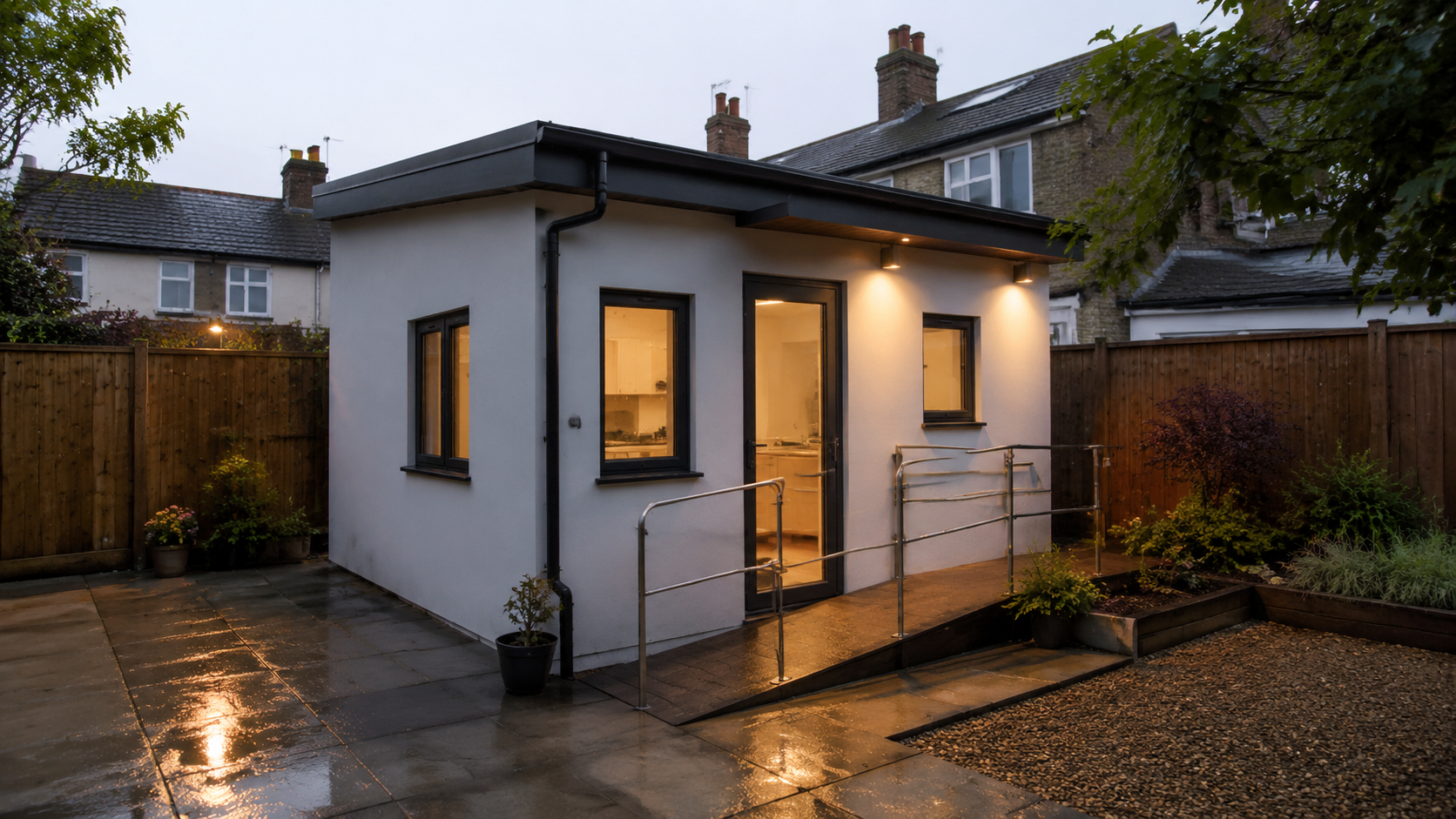 Generated concept image for a compact garden home. It is illustrative, not a supplier photo.
This is exactly the problem Get Out Of That Garden is built around. Plenty of families have garden space. Plenty of adult children are stuck between rent, deposits and living at home. A small garden home sounds obvious. The details decide whether it is viable.
If the option you are considering is a mobile or wheeled unit rather than a fixed garden home, read site for mobile home Ireland and planning permission for a mobile home in Ireland before choosing a supplier.
The quick answer
You need four checks before anything else:
| Check | Why it matters |
|---|---|
| Planning route | A detached habitable unit is not a normal shed |
| Garden fit | Size, access, boundaries and remaining open space matter |
| Services | Water, wastewater, electricity, heating and broadband can decide cost |
| Family/legal/tax setup | Ownership, rent, bills and future sale need thought |
The April 2026 Government announcement is important because it proposes a new exemption for auxiliary habitable dwellings between 32sqm and 45sqm linked to the services of the principal house. But the announcement also says timing depends on the formal process and that full conditions will be published.
So yes, this could become a practical route for many families. No, it is not a blank cheque to drop a house into every garden.
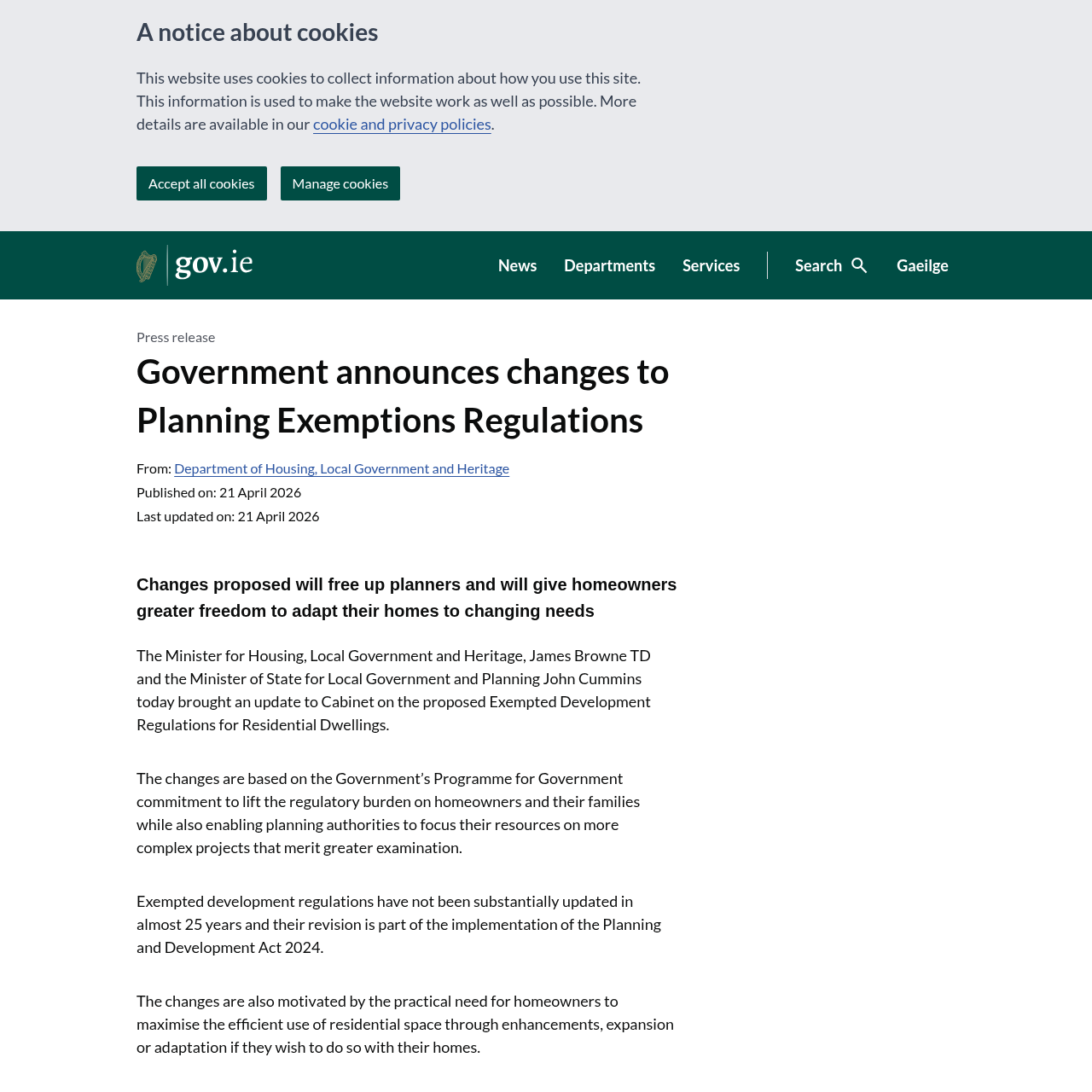 Official gov.ie announcement captured with Jina. It points to a new route, but final conditions still matter.
Start with the use case
Your use case drives everything.
Adult child accommodation is different from a parent downsizing. You may need privacy, broadband, space to work, storage and a setup that does not feel like a temporary bedroom.
Parent or relative accommodation may need level access, safer bathroom design, better lighting, heating controls and future care support.
Rental income is a separate path. Planning, tenancy rules, insurance, tax and financing all become more serious.
Guest use can sound harmless, but if the unit has a kitchen, bathroom and separate sleeping area, you should still treat it carefully.
Write the use case in one sentence before you speak to suppliers. Example:
"We want a 35sqm-45sqm garden home in my parents' back garden in County Cork for an adult child to live independently, connected to the main house services if possible."
That sentence is better than "how much for a modular home?"
Can the garden actually take it?
A garden can look big enough and still fail the practical check.
Measure:
- Width and depth of the garden.
- Side access width.
- Distance from road to proposed location.
- Boundary distances.
- Trees, walls, sheds and level changes.
- Remaining usable garden space.
- Existing drains and services.
- Neighbour windows and privacy.
Take photos from the road, side access and proposed location. Suppliers can give better first-pass feedback when they see access and obstacles.
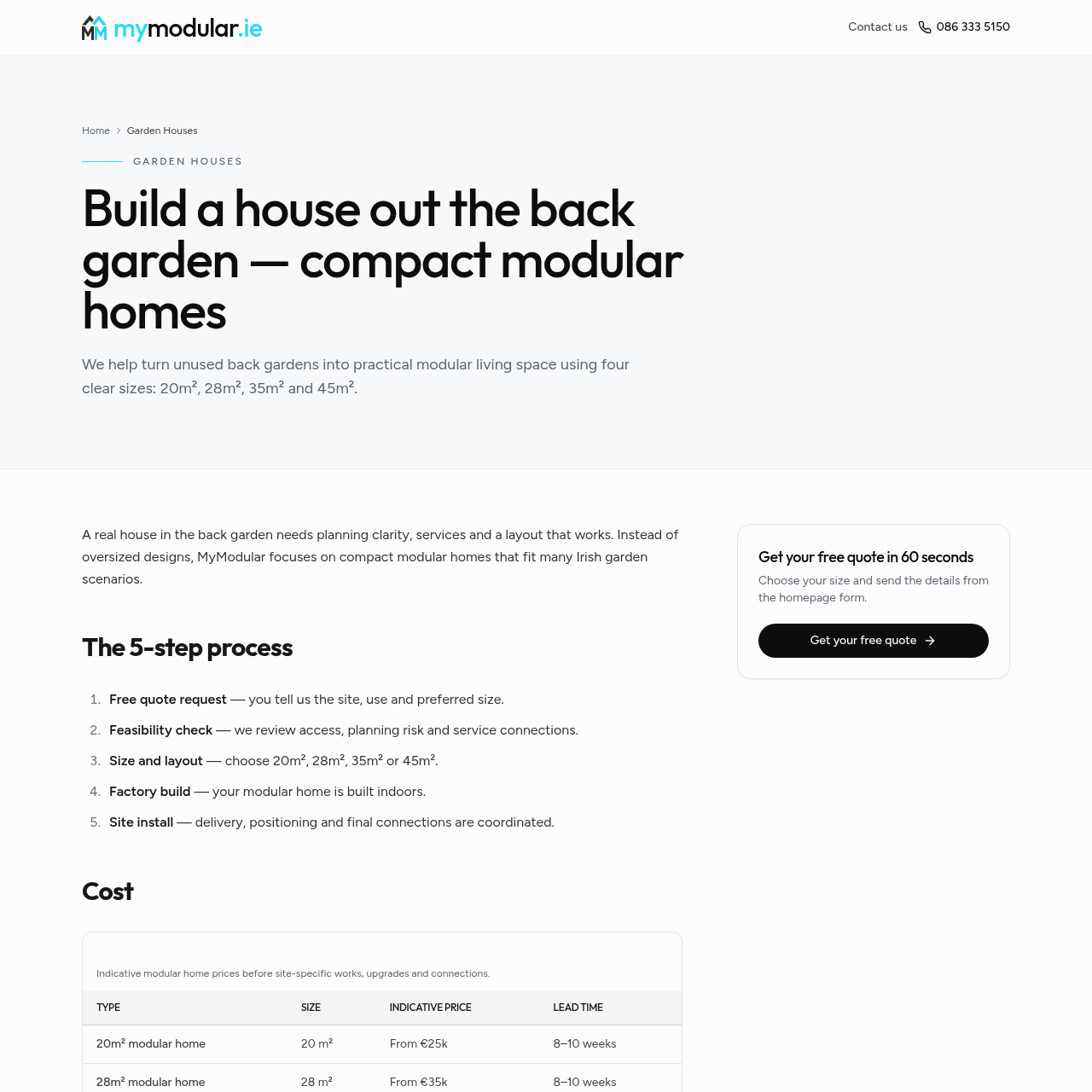 Jina screenshot from a supplier page focused on back-garden modular homes.
What the 32sqm-45sqm proposal means
The gov.ie announcement says the proposed auxiliary habitable dwelling exemption would cover detached habitable accommodation linked to the services of the principal house, between 32sqm and 45sqm in floor area.
Those words are important:
- Auxiliary suggests it is connected to the main home context, not a completely separate speculative house.
- Habitable means building, fire and building control requirements matter.
- Linked to services means utilities are part of the rule design.
- 32sqm-45sqm gives a scale, not permission for every site.
Until the final regulation text and conditions are in force, treat supplier claims as assumptions. If your project needs certainty now, ask a planning consultant or local authority what route applies today.
What it might cost
Public supplier examples for compact modular units often start in the €25k-€55k range before site-specific works. That is only the product signal. Your parents' garden project may also need:
| Cost item | What to ask |
|---|---|
| Base/foundations | Is this included or priced after survey? |
| Transport and lifting | Will a crane be needed? |
| Electrics | Who certifies the connection? |
| Water | Is there a practical route? |
| Wastewater | Existing drainage, pump or new works? |
| Heating | Running cost and control |
| Planning/design | Are drawings included? |
| Compliance | Building control, fire, ventilation, BER |
| Legal/tax | Ownership, rent, bills, future sale |
The wrong question is "what is the cheapest home?" The better question is "what is the cheapest compliant way to create independent living space on this exact site?"
Family money conversations
This is the part many families delay. Do it early.
Who owns the unit? Who pays for it? Is money a gift, loan or rent? What happens if the adult child moves out? What happens if the parents sell? What happens if a sibling later questions the arrangement?
You may need legal and tax advice. That does not mean the idea is bad. It means the structure should be clear before the family spends serious money.
If anyone plans to pay rent, be especially careful. Current Revenue guidance says detached units do not currently qualify for Rent-a-Room relief. The Government has said future tax arrangements for auxiliary dwellings are to be considered, but that is not current tax law.
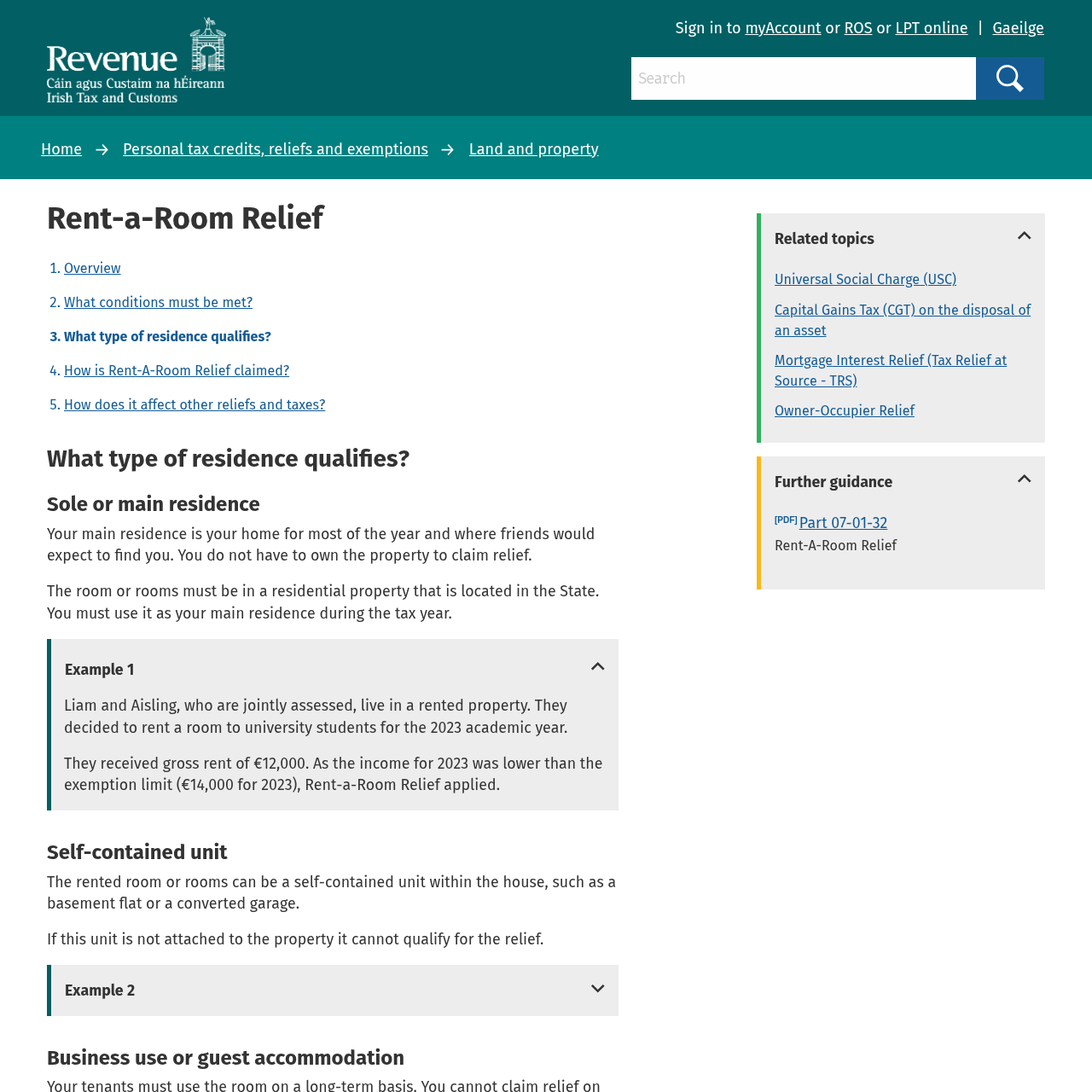 Revenue guidance captured with Jina. Detached units do not currently qualify for Rent-a-Room relief.
A simple yes/no pre-check
You are probably ready to request quotes if:
- The garden can physically fit a 32sqm-45sqm unit.
- Access looks possible or a crane route can be explored.
- The family agrees the main use.
- You have a realistic budget range.
- You understand planning is not guaranteed.
- You are willing to separate supplier price from site works.
You should pause if:
- The only plan is "we will rent it tax free".
- The side access is tiny and no one has checked lifting.
- The garden would be almost gone after the unit.
- No one has discussed ownership or family money.
- A supplier tells you planning is definitely fine without site details.
What to send in a quote request
Send suppliers the same information so replies are comparable:
- County and Eircode area, not the full address at first if you prefer privacy.
- Photos of the garden and access.
- Intended use: adult child, parent, guest, rental or mixed.
- Preferred size: 20sqm, 28sqm, 35sqm, 45sqm or unsure.
- Bathroom/kitchen needs.
- Budget range.
- Timeframe.
- Planning uncertainty or local constraints.
This saves weeks of vague calls.
FAQ
Can I legally build in my parents' garden in Ireland?
It depends on the site, size, use and planning route. The proposed auxiliary dwelling exemption could help, but final conditions and timing still need checking.
Can I build a 45sqm home without planning permission?
Do not assume that. The Government announced a proposed route for 32sqm-45sqm auxiliary habitable dwellings, but it is subject to conditions and formal completion.
Can I live in a garden room?
A garden room used as an office or studio is different from a habitable dwelling. If you plan to live in it, treat it as a planning and building control matter.
Can my parents charge me rent?
They may be able to charge rent, but tax and legal treatment need advice. Detached units do not currently qualify for Rent-a-Room relief under Revenue's current guidance.
Is this cheaper than buying a house?
Usually the upfront number is lower than buying a separate home, but that is not the only comparison. You need to include site works, services, planning, family agreements and future flexibility.
What is the next step?
Use the garden check below. Give the county, use case, rough size, access notes, budget and timeframe. We can then route the lead into a sensible supplier shortlist rather than a random quote request.